Sujit Silas Armstrong Suthahar
Ph.D. CandidateUCLA
sujitsilas (at) ucla.edu
About Me
Hello! I'm Sujit, a computational biologist with close to six years of experience working at the intersection of biology, immunology, and data science. My research focuses on using single-cell, spatial, and multimodal approaches to understand how cells transition between inflammatory, reparative, and dysfunctional states and how those cellular states ultimately shape tissue outcomes.
I'm currently pursuing a PhD in Bioengineering at the Henry Samueli School of Engineering, UCLA, co-advised by Dr. Philip Scumpia and Dr. Dino Di Carlo. I study the interactions between myeloid and epithelial compartments following injury. I am interested in how resident and recruited immune populations change state within their tissue environment, how inflammatory programs transition toward resolution and repair, and how cell–cell interactions determine whether tissue returns to homeostasis or progresses toward chronic inflammation and pathological remodeling.
Although macrophages are a major focus of my work, I view them as part of a broader network rather than an isolated cell type. Macrophage states exist along continua shaped by both ontogeny and the local tissue niche. My work therefore aims to resolve these states in the context of the surrounding cellular ecosystem including epithelial, stromal, and other immune populations by connecting changes in cellular state to functional tissue outcomes.
Before UCLA, I worked as a Bioinformatics Specialist at the La Jolla Institute for Immunology under the mentorship of Klaus Ley, MD, where I worked with single-cell transcriptomics, CITE-seq, and T-cell receptor sequencing data to investigate immune responses underlying inflammation and disease progression in atherosclerosis and cardiovascular disease.
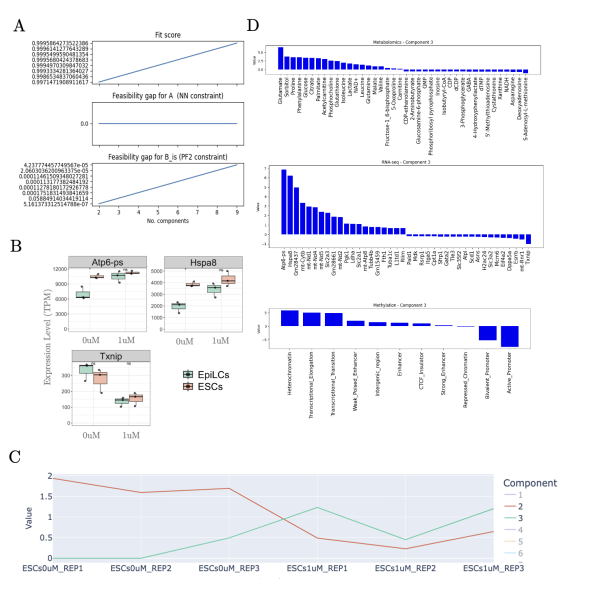
My earlier training at UCLA during my MS in Bioengineering was in toxicology under the guidance of Dr. Patrick Allard. During this time, I developed matrix factorization approaches to characterize transgenerational responses to toxicant exposure in embryonic stem cells. The challenge was to extract interpretable structure from three distinct types of high-dimensional biological measurements and integrate them to jointly understand the underlying biological processes.
I am interested in AI × Biology, particularly in developing frontier biological models that understand cellular states, cell–cell communication patterns, and tissue contexts or surrounding environments in order to predict disease outcomes and identify effective therapeutic strategies.
Research Interests
- Computational Biology: single-cell genomics, toxicology, proteomics, systems immunology, TCR discovery, cell type discovery, epigenomics, transcriptomics
- Machine Learning: deep learning, modality transformation, featurizaton, matrix factorization
News ▼
- [Sep. 2026] Teaching assistant for LS 30A mathematics for life scientists
- [Mar. 2026] Teaching assistant for BIOE 175/275 machine learning & data-driven modeling
- [Mar. 2026] Advanced to PhD candidacy
- [May 2025] Received the Engineering Achievement Award in Student Welfare from the UCLA Samueli School of Engineering
- [Mar. 2025] Completed my MS in Bioengineering at UCLA
- [Mar. 2025] Presented at SOT 2025
- [Sep. 2024] Completed my internship at GRAIL
- [Jun. 2024] Started my comp bio / ML internship at GRAIL
- [Mar. 2024] Presented at the UCLA JCCC Annual All-Center Symposium
- [Feb. 2024] Presented at the UCLA BIOE conference
- [Oct. 2023] Appointed as a GSR at UCLA
- [Sep. 2023] Started my MS in Bioengineering at UCLA
- [Jul. 2023] Concluded my position as a Bioinformatics Specialist at LJI
- [Jul. 2021] Accepted offer to work as a Bioinforamtics Specialist at LJI
- [Mar. 2021] Graduated with a BS in Biology with Honors from UCR
Past Work


Other Interests
Photography
@sujitsilas_photographyReading
Outlive by Peter Attia, MD
Listening
All-In with Chamath, Jason, Sacks & Friedberg